Kory Melby's Brazilian Ag Consulting Services and Investment Tours


Ag Sector


Brazilian Soybean Information and News

Soybeans and Corn Brazil


marcador

The average yield in the 2010/11 crop was 3,115 kilograms per hectare (46.24 bu/ac) - source CONAB

marcador

1/3 (4 million tons) of all exported soybeans from the Port of Paranaguá, still in the form of grain - source Safra Cheia


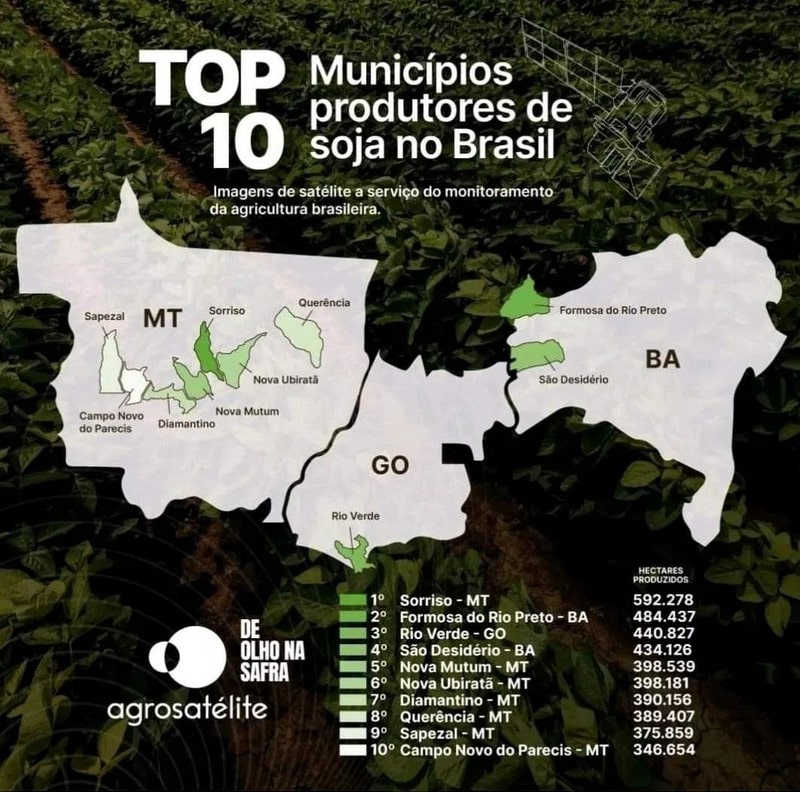
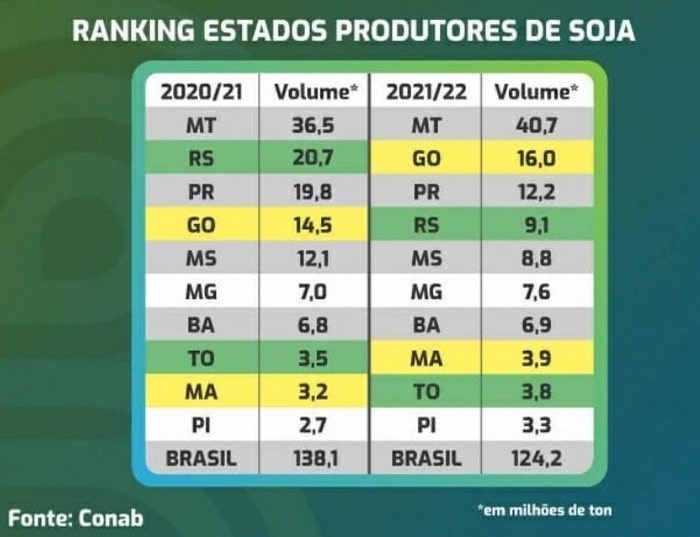
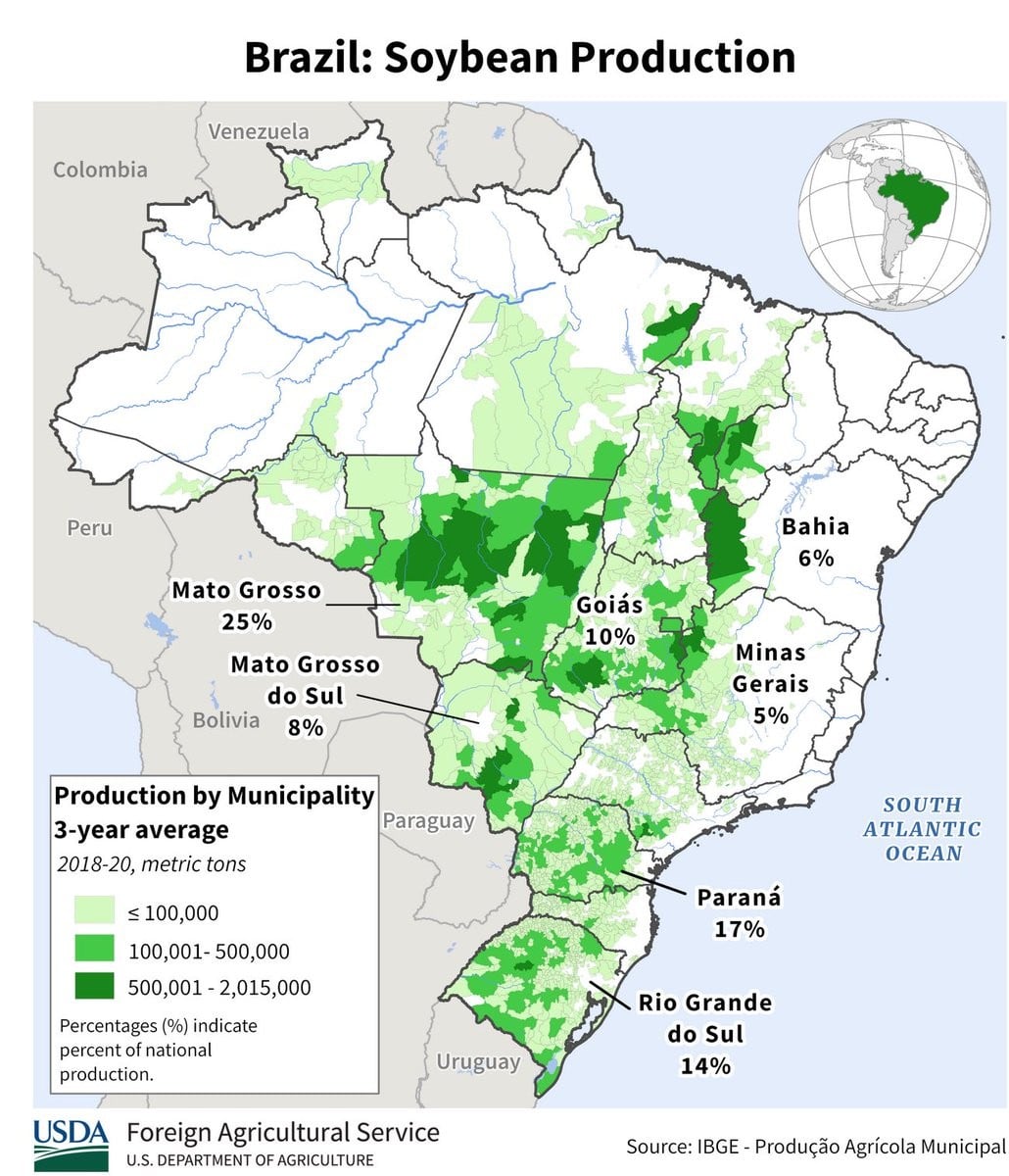
Brazil Soybean Production by State

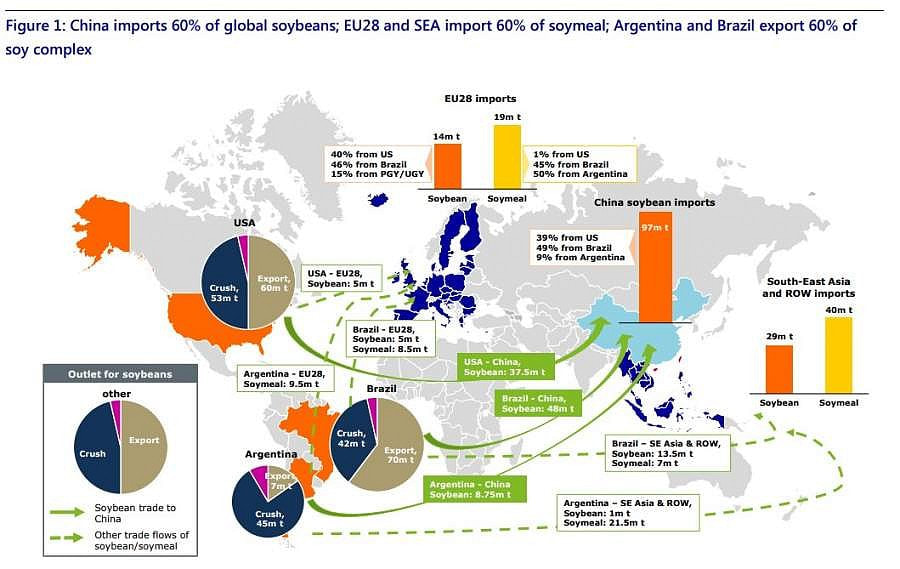
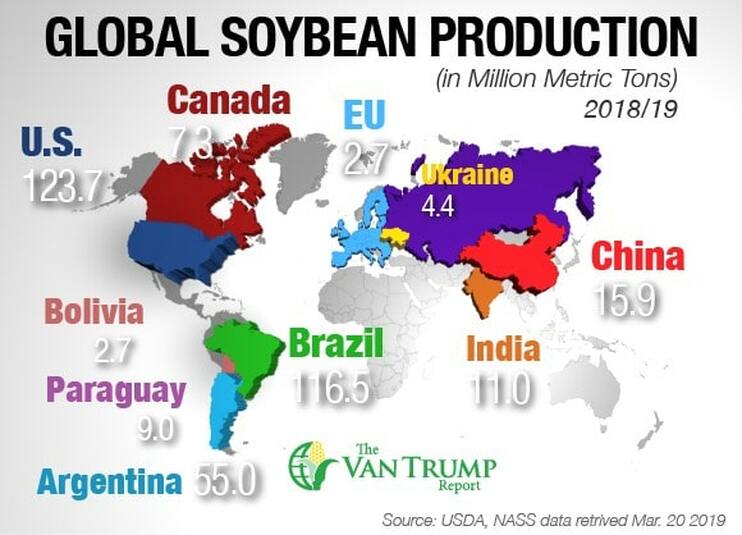
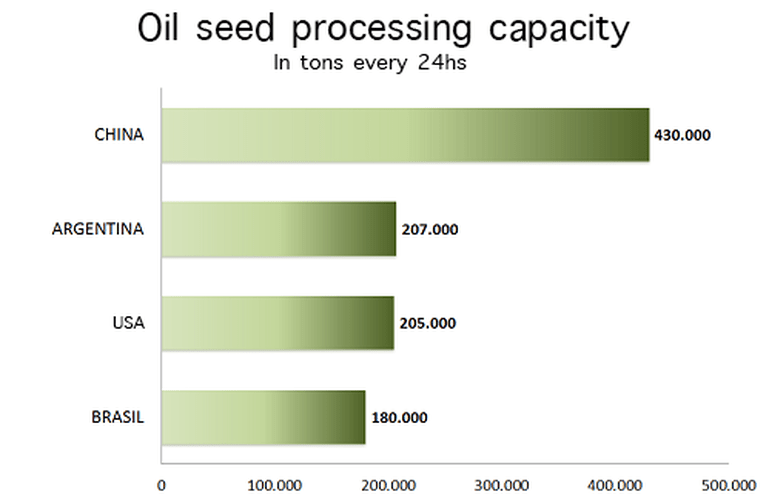
Brazil and Argentine soybean stats

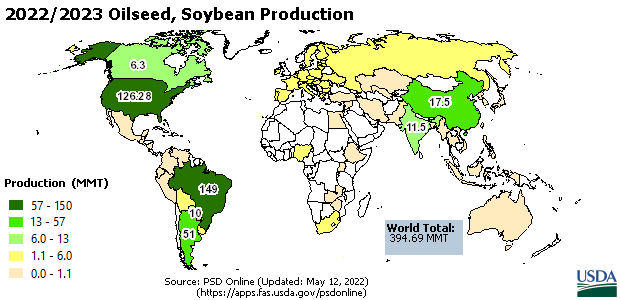
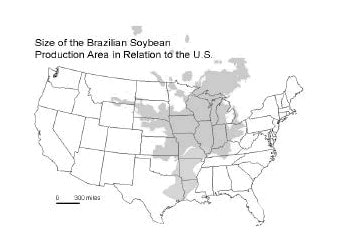
Soybean Maps Arg & Bra

Brazil Soybean Production
by State USDA - FAS

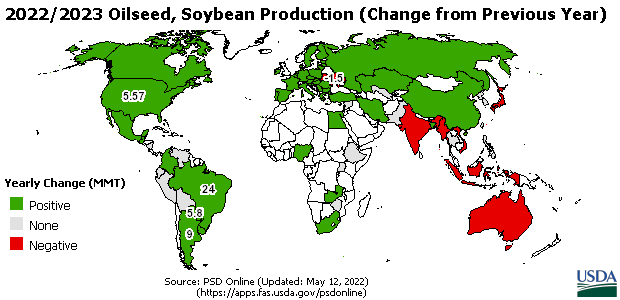
Soybean World Stats
Brazil & Argentina


Chart - Crushed and Exported soybeans from Brazil


Ag News Soybeans and Corn Brazil

Ag News: Soybeans and Corn


comments on planted area and prices 


23 Nov 11


From Previous Newsletter: Sent out to subscribers on Oct 31.


Soybeans have fallen dramatically recently with European worries.
With the dollar rallying: Brazil is aggressively selling 2012 beans.
Currently the dollar is at 1:87:1
 

Kory Melby's comments on ag situation Brazil 23 Nov 2011


I think we are at the lower end of the trading range for now.
China will step in with purchases now.


5 Dec

Chart Brazilian soybean exports - grain, meal, oilBrazil exported 4.5% more soybean meal from January to November compared to the same period last year


Brazil exported 1.2 million tons of soybean meal in November, according to the Ministry of Development, Industry and Foreign Trade (MDIC). Revenues reached US$ 445.9 million.

The volume was 13.1% lower than that shipped in October, but increased 13.6% compared to November last year. Revenue in turn decreased 18.2% compared to October, but was 6.7% higher than that recorded in November 2010.

From January to November this year, the country exported 13.35 million tons of soybean meal, 4.5% more than the same period in 2010.

The average price per ton of exported product in the last month was US$ 371.00, compared to US$ 395.00 in October.

In the domestic market, according to a survey of Scot Consulting, a ton of food is listed, on average, R$ 667.00 in São Paulo.

source: SCOT CONSULTING via RuralBR


chart:  Brasil Agro


Interesting week:  Operation Twist - twisted the soybean market very well. 

23 Sept 11


Soybean prices Brazil - Apr 10 through Sept 11This past week the dollar rallied from 1:65 to a high of 1.95:1 on Thursday morning.  EURO worries combined with operation twist created a down draft of selling pressure in soybean market.

For the Brazilian farmer, Monday through Thursday was like living in an alternate reality. Each morning I would receive emails from Brazilian producers asking me what is going on in Chicago? "We don't understand? We have standing orders at our COOPS to scale up sell our 2012 production. We see CBOT go down each night; then each morning the COOP manager calls us and tells us that our orders are filled????"

Soybeans drop US$ 1.50 per bushel and producers in Parana started selling soybeans on Monday at R$ 48 per sac and by Thursday morning offers at R$ 50/sac were being filled.

(US$ 11.80 per bushel to US$ 12.25 per bushel locally) "Depending on the dollar exchange” Generally speaking the dollar has rallied 20% and soybeans have dropped 12% in the same time frame. This trend reversed Friday with continued sell off on CBOT and a sell off in the dollar too. The bulk of the 2012 Brazil soybean crop has been sold now.

This was the best of all worlds. Never has a Brazilian producer been able to sell his future crop at record prices in his own currency at the beginning of planting. He bought his seed, chemical and fertilizer months ago at reasonable prices and cheap dollar. Now he sells his production while CBOT was at the highs of the year and currency exchange working in his favor.

This must be a dream?

Only thing left to do is grow 70 sac per hectare soybeans and book a trip to Disney World for 2012.

Thank you PIIGS, EURO, OPERATION TWIST, and anyone else that would like to take credit.

Personal Note:
Notice in the above posting that I did not mention anything about the shrinking size of USA corn and soybean crop, nor did I mention that China was in or out of the market.

The above market events took place "Outside" the normal Supply/Demand "Fishtank" that many of us obsess about on a daily basis. Global currency spreads unwinding trumped half a bushel per acre plus or minus crop size estimates.

22 Oct

Brazil farmers reducing edible bean planting for corn or soybeans due to price.Corn and soybean acreage steal From beans


The producers of beans in Brazil will reduce up to 20% of its planted areas in the 2011/2012 season, which began in August. The main reason being the low price of edible beans compared to corn and soybeans. 


Some farmers in the States of Parana and Minas Gerais are already talking of planting 50% less and replacing the their bean corps with corn or soybeans.
 

source: DCI via Notícias Agrícolas


18 Oct

Corn outlook Brazil 2011Planted area increases in BR due to high quotes

The corn planted area for the summer crop in Brazil might move up in 2011/12. Favorable prices and promising profitability have driven this increase in area. However, in early October, oscillations in the international market started to affect quotes, which has resulted in price drops.

The ESALQ/BM&F Bovespa Index for corn (Campinas-SP region; cash price, using the CDI discount tax), from Sept. 30 to Oct. 14 dropped 3.06%, closing at 30.78 reais or US$17.77 per 60-kilo bag.

Considering the NPR discount tax, prices (Campinas-SP region; cash price) closed at 30.21 reais or US$17.44 dollars per 60-kilo bag, a decrease of 3.14% in the same period.

Conab (National Company for Food Supply) indicated that the area in this summer crop might reach between 8.25 and 8.5 million hectares, which may represent an increase of 4.2% to 7.2% compared to the previous summer season.

For the time being, the average yield is estimated at 4,391 kilos per hectare, 3.3% lower than in the 2010/11 season (4,538 kilos per hectare). The production is forecast to reach between 35.98 and 37.48 million tons, upping 0.2% to 4.3% in relation to the previous (35.93 million tons).

In early October, producers were encouraged again to step up planting activities of the summer crop due to rains in many Brazilian states. In Mato Grosso, rains have favored the soybean planting, therefore, its harvesting might occur at an ideal time for the planting of the second corn crop, in early 2012.

In Paraná state, according to Seab/Deral (Secretariat of Agricultural Products Supply of Paraná state), planting activities of corn had already reach 70% of the forecast area until Oct. 10. In Rio Grande do Sul state, 55% of the area has already been cropped, according to Emater (Institution for the Agricultural Development of the Government of the Rio Grande do Sul state).

Trades were even slower due to the holiday (Oct. 12, a religious day in Brazil). Because of the valuation of Real against the dollar, prices in the domestic market have kept the downward trend, while in the international market, quotes bounced back.

Brazil’s exports of corn amounted 1.65 million tons in September, 8.2% more than in August, but 14.6% less than September 2010.
 

source: Cepea – Brazil


27 Sept

Harvest begins with optimism: climate and prices are favorable

According to researchers from Cepea, the weather conditions remain positive, mainly in southern Brazil. Besides adequate temperatures, soil moisture is favorable for new crop cultivation and planted crops from the previous weeks. Meanwhile, demand and the strong devaluation of the Real against the U.S. dollar raised prices. Between 19 and 26 September, the indicator ESALQ / BM&F Bovespa (Campinas, SP region) rose 0.72%, closing at R$ 32.36 / bag of 60 kg on Monday.


source: Cepea


26 Sept

Soybeans Take a Back Seat to Corn

By ANDREW JOHNSON JR. - WSJ

Reduced production of soybeans in the U.S. and expectations that South America's crop won't make up for the shortfall could push inventories to historic lows by next summer, boosting prices.

U.S. soybean prices have been mostly stagnant this year, masking a decline in U.S. production. Farmers increasingly favor planting more-lucrative crops such as corn, which yields a larger crop per acre, making the grain more profitable at current prices.

Some South American farmers also are shifting to higher-priced crops. Paulo Shimohira, a Brazilian farmer in the northern state of Bahia and the central state of Goiás, said he is planning to increase corn production by roughly 3,700 acres, while scaling back the number of acres he sows with soybeans when he plants his crop in the coming months.

"Corn looks like it's going to be a good business," he said.

Little growth in the South American soybean crop would come on top of an expected 7.3% drop in U.S. soybean production. Above, soybeans are stored at a deposit in Montevideo, Uruguay.
.Crop prices have held up better than other commodities in the face of concerns over slowing economic growth. Yet corn, wheat and cotton prices have faced some sharp swings, while soybeans have traded mostly between $13 to $14 a bushel this year.

U.S. soybean futures dipped below that range amid a broad global selloff last week, settling Friday at $12.58 a bushel, the lowest level of the year.

China particularly relies on the western hemisphere for oilseeds to feed livestock and produce cooking oil as diets change among its emerging middle class. Yet this past spring, U.S. farmers started to set the stage for tightening supplies by cutting back on the number of acres they sowed with soybeans to take advantage of strong corn prices.

Growers in Brazil and Argentina could follow suit in the coming months as they plant, pulling back from their recent role of making up for shortfalls in the U.S. harvest. Further clouding the outlook for crops in Brazil and Argentina is the potential for a La Nina weather pattern, which could bring dry weather and cut crop yields.

Agricultural consultancy Celeres forecasts Brazil's corn crop will jump by nearly 9% from a year ago to 58.39 million metric tons. The soy crop is expected to merely rise 0.4% to a record 75.18 million metric tons. Argentina is expected to plant about the same amount of soybeans as a year ago, while corn plantings are seen rising 9% to 10%, said Ricardo Baccarin, vice president of Panagricola, a brokerage.

Little growth in the South American soybean crop would come on top of an expected 7.3% drop in U.S. soybean production. Federal forecasters are projecting end-of-season supplies in the U.S. next summer at 165 million bushels. That's 27% below end-of-season supplies for the crop year that just ended and provides a cushion equal only to roughly 20 days of demand.

.Goldman Sachs in a recent report predicted soybean prices will rally over the next 12 months as production struggles to keep pace with demand. The bank cited competition for land from other crops and the potential for poor weather in South America as the main threats.

"Soybean prices need to either outperform corn prices in coming months to secure sufficient acreage or will need to rally sharply next summer to achieve demand destruction in the face of lower supplies," Goldman Sachs analysts wrote.


—Paul Kiernan, Shane Romig and Leslie Josephs contributed to this article.
Write to Andrew Johnson Jr. at andrew.johnson@wsj.com


15 Sept

Mercosur Consolidates As Leading Soybean Region With 52% Of World’s Production

In twelve years Mercosur has consolidated as the leading region in soybean production with 52% of the world crop and the potential to further expand area and yields.


click here for full article


08 Sept

How to increase the productivity of maize


The corn yield in the regular crop in Brazil is still very low. This season (2010/11) the national average was 4,571 kg/ha, ranging from 2.102kg/ha  in Northeast Brazil to 7.537kg/ha in the Central-West.


Photo Portal do AgronegociosThese numbers do not reflect the high potential cereal production. In a survey conducted by researchers at Embrapa Maize and Sorghum (Sete Lagoas / MG) in the 2007/08 harvest, it was found that in 1095 crops in several regions of the country the average yield was 11,034 kg / ha, varying from 8,000 to 16,000 kg / ha.


It appears that income differences are still very large in terms of adopted technologies and managerial capacity of producers. This situation indicates the possibility to increase productivity in nearly all regions based on successful cases.


While there is a wide diversity with regard to cereal production systems in Brazil, it is possible to identify points that can be improved. They are: use of planting density and appropriate spacing, correct planting times, use of productive and cultivars adapted to the region and production system, proper fertilizing as per prior analysis, appropriate  control diseases, weeds and insects.


"The first concern that the producer must have is with the seed he will plant. There are about 500 different types of maize seed, but the producer must choose the one most suited to his situation, taking into account his degree of capitalization and management capacity." said Jose Carlos Cruz's.


Competitiveness depends on culture better use of knowledge already available and validated and that, in most cases, requires little financial investment, but requires further monitoring and management capability of farmers.


source: EMBRAPA MILHO E SORGO via Portal do Agronegocios


Mato Grosso Ag News

Soybean Analysis Mato Grosso

Soybean Production Cost


More about the soybean and corn sectors in Brazil on Kory's,  Updates and Comments  page.